Step outside on a July afternoon in Woodland Hills and you can feel why roof coatings matter. The sun is direct, the air is dry, and rooftops soak up energy from morning until early evening. For homeowners choosing metal, the right coating is the quiet technology that keeps attics cooler, colors stable, and panels protected year after year. If you’re considering metal roofing, understanding how coatings fight heat—and how to select them for our microclimate—will help you get the most from your investment.
How Heat-Resistant Coatings Work
Heat resistance in roofing coatings comes from two key properties: solar reflectance and thermal emittance. Reflectance determines how much sunlight, particularly in the infrared spectrum, bounces away instead of being absorbed. Emittance describes how quickly the material releases any absorbed heat. A coating engineered with high values for both keeps roof surfaces cooler. In Woodland Hills, where afternoon sun can be relentless, this combination reduces attic heat gain, supports interior comfort, and promotes the long-term health of the entire roof assembly.
Coating Chemistries You’ll See
Modern metal roofs commonly use two finish families on residential projects. One is known for elite color stability and UV resistance, favored for upscale applications and high-exposure sites. The other performs admirably with a broad palette and serves homeowners well when selected thoughtfully. Regardless of chemistry, look for finishes that incorporate infrared-reflective pigments and are rated for elevated surface temperatures. The difference shows up when your roof faces directly into the sun from midday through evening, which is everyday life in Woodland Hills.
Color, Reflectance, and Real-World Comfort
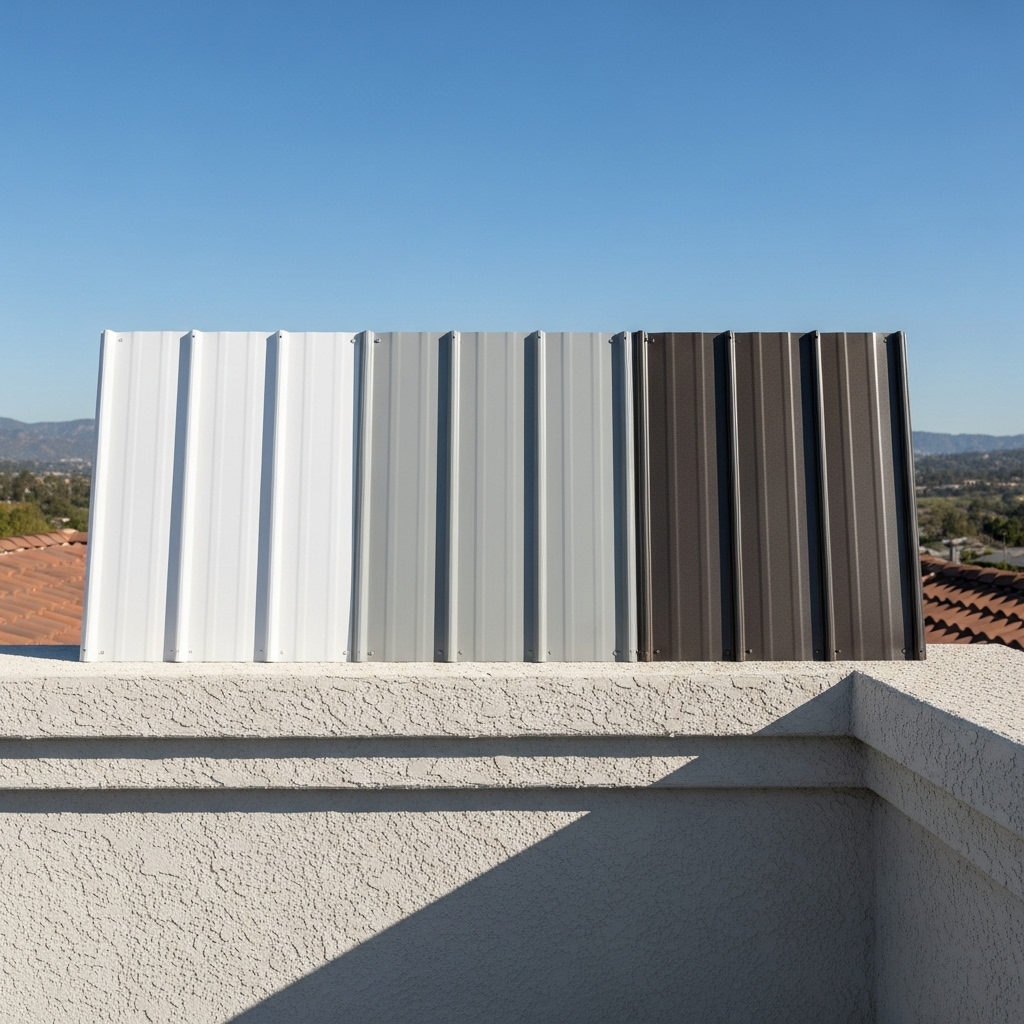
Color is more than a style choice; it’s a performance setting. Lighter tones reflect more sunlight and keep surfaces cooler. In our climate, off-whites, pale grays, and sand colors are top performers. That said, many homeowners prefer deeper hues to complement stucco, stone, or modern accents. Coatings with advanced pigments let charcoal, bronze, and rich earth tones reflect more of the sun’s invisible heat than their color suggests. The result is a roof that reads bold without acting like a heat sink. Seeing samples outdoors at midday helps you choose a color that looks right and works hard.
Why Emissivity Matters at Night
Woodland Hills cools quickly after sunset, and that diurnal swing stresses roof materials. Coatings with high emissivity release accumulated heat efficiently, reducing the amount of thermal energy trapped in the assembly. That, in turn, reduces nighttime expansion-contraction cycles and helps maintain finish integrity. It also lowers the temperature contrast between roof and sky, which subtly reduces the potential for condensation inside the assembly.
Matching Coatings to Roof Geometry
Large, unbroken roof planes collect and radiate heat differently than shaded, complex roofs. If your home has broad south- and west-facing slopes, prioritizing high-reflectance finishes will make a noticeable difference. On shaded or multi-plane roofs, you can emphasize color coordination with the façade while still selecting a finish that meets elevated reflectance benchmarks. In each case, pairing the coating with a high-temperature underlayment and balanced ventilation maximizes the benefit.
Underlayments That Complement Cool Coatings
A heat-resistant coating is only one piece of the system. Beneath your panels, high-temperature synthetic underlayments maintain stability when thermometer readings climb. Self-adhered membranes in valleys and eaves add extra protection where water collects or wind can drive rain. By reducing heat absorption up top and safeguarding the deck below, you create a balanced assembly that shrugs off summer extremes.
Ventilation: The Quiet Partner
Even the best coating cannot work alone. Ridge vents paired with ample soffit intake let hot air exit naturally. In some designs, a vented nail base or batten cavity adds an airflow channel under panels, further moderating heat transfer. When your roof assembly breathes, coatings stay cooler, underlayments last longer, and interior comfort improves—all without mechanical intervention.
Durability, Fade Resistance, and Aesthetics
Heat and UV exposure age coatings. Finishes designed for color-retention resist chalking and fading common in high-sun markets. That means your roof keeps its intended shade and sheen longer, preserving curb appeal. In Woodland Hills, where rooftops are visible from hillside vantage points and evening light rakes across surfaces, color stability is part of the overall design success.
Selecting a Palette for Woodland Hills Architecture
Our neighborhoods host a mix: mid-century ranches, Spanish-inspired homes, modern rebuilds. Heat-resistant coatings come in hues that complement each. Soft, warm neutrals sit comfortably against stucco and clay accents. Cooler grays and charcoals pair with minimalist lines and expansive glass. When selecting, bring sample panels into sunlight and shadow. The same color shifts throughout the day, and seeing those changes helps you choose a shade you’ll love in every light.
Edge Details and Thermal Behavior
Heat influences more than surface temperature; it drives movement. Panels expand and contract daily, so eave hems, ridge terminations, and clip spacing must accommodate motion without compromising watertightness. Coatings with strong adhesion and flexibility maintain integrity through these cycles. The craft is quiet but crucial: accurate hems, sealed laps, and aligned seams keep the system composed through every thermal swing.
Storm Readiness and Santa Ana Winds
Coatings don’t hold panels down—fasteners and clips do—but smooth, well-finished surfaces reduce debris accumulation and help water shed cleanly during sideways rain. A heat-resistant coating stays stable rather than becoming tacky when hot, so windblown dust and pollen rinse away easily after a brief shower or hose-down. That cleanliness supports performance and aesthetics year-round.
Maintenance for Coated Metal Roofs
Care is simple: keep gutters clear, rinse dust and pollen seasonally, and perform a visual inspection after major wind events. On exposed fastener trims, occasional checks ensure washers are sound. For the finish itself, avoid harsh abrasives and stick with gentle washing. Heat-resistant coatings are engineered for longevity; routine housekeeping is all they ask to remain bright and effective.
Integration With Solar and Rooftop Accessories
Heat-resistant finishes pair naturally with solar because cooler roofs can marginally improve panel efficiency on hot days. Planning clamp locations on standing seam, or bracket flashings on other profiles, preserves the finish while delivering secure attachment. Thoughtful routing for conduits and clearances minimizes shading and keeps your roof tidy. A cohesive plan ensures both systems—roof and solar—work together for decades.
Frequently Asked Questions
Do lighter colors always perform better?
Lighter colors offer the highest reflectance, which is helpful in our sun. However, modern coatings with infrared-reflective pigments allow many medium and even darker shades to perform surprisingly well. Choose a hue you love, then verify its reflectance and emissivity values.
Will a heat-resistant coating reduce indoor temperatures?
It contributes significantly, especially when combined with proper ventilation and insulation. Expect a cooler attic and less heat radiating into living spaces during peak hours, which improves comfort without altering your home’s look.
How long do coatings last in our climate?
Premium finishes are engineered for long-term color stability and gloss retention under harsh UV. Lifespan depends on exposure, orientation, and maintenance, but the right finish will look sharp and protect the metal for many seasons of Woodland Hills sun.
Are special cleaners required?
No. Gentle washing with water and mild soap is typically sufficient. Avoid abrasive tools and harsh chemicals that could dull the finish. Rinsing after dusty or pollen-heavy periods keeps the roof looking its best.
Can I choose a dark color without excessive heat gain?
Yes, if the finish uses advanced pigments designed to reflect infrared energy. You can achieve a bold aesthetic and still manage heat effectively when the coating is formulated for performance.
Do coatings impact solar panel performance?
Indirectly. Cooler roof surfaces can help solar panels operate closer to their ideal temperature on very hot days. More importantly, coatings protect the roof under the array, ensuring the assembly remains stable for the life of the solar system.
Ready to select a finish that keeps your home cooler, your colors truer, and your roof resilient through Valley summers? Bring your questions, your architectural inspiration, and your roof measurements. A local team can help you compare samples in real sunlight, pair coatings with the right underlayments and ventilation, and map a clear path from idea to installation. When it’s time to move forward with high-performance metal roofing, schedule a site visit and see how the right coating can elevate your home’s comfort and curb appeal.