
Fire-Resistant Roofing: Class A Roofs for California Wildfire Zones
Fire-resistant roofing means a Class A roof: the highest of three ratings in the ASTM E108 / UL 790 fire test, given to roofs that hold up against severe fire and burning embers. California requires Class A on new buildings in state fire hazard areas and in local High and Very High zones, and on every new roof, re-roof or repair in a Very High zone.
NEMA Roofing installs Class A metal, tile and shingle roofs across Santa Barbara, Ventura, Los Angeles, Riverside and San Bernardino counties.
What does a Class A fire rating mean?
Roof coverings are fire-tested under ASTM E108, the same method as UL 790. The lab runs an intermittent flame test, a spread of flame test and a burning brand test, and checks whether the covering sends off flying burning material in a 12 mph wind. Where it applies, a rain test checks whether long exposure to rain weakens the fire performance.
- Class A: effective against severe fire exposure.
- Class B: moderate fire exposure.
- Class C: light fire exposure.
- Unrated: no tested protection. Untreated wood shakes are the common example.
The rating belongs to the tested assembly, not to the shingle, tile or panel alone. A listing describes the assembly that passed the test (the covering, the underlayment and the deck type), and the California Building Code requires Class A roofs to be listed by an approved testing agency. When you compare proposals, ask which listing the roof will be built to.
When does California require a Class A roof?
It depends on where the house sits on the state’s fire hazard maps and on the work being done:
- New homes and buildings in the State Responsibility Area (every hazard level), in a High or Very High zone of a city or county, or in a locally designated wildland-urban interface area need a Class A roof assembly. These rules were Chapter 7A of the California Building Code; since 1 Jan 2026 they sit in the California Wildland-Urban Interface Code (Title 24, Part 7, sections 101.3.1 and 504.2).
- Existing homes in a Very High zone: a new roof, a re-roof of more than half the roof within one year, and any covering used in a repair must be at least Class A (Health and Safety Code 13132.7).
- Existing homes in a High zone of the State Responsibility Area: a new roof, a re-roof of more than half the roof within one year, and any covering used in a repair must be at least Class B (Health and Safety Code 13132.7(c)).
- Outside every fire hazard zone, the state minimum is Class C (Building Code section 1505.1.2).
Cities, counties and fire districts can set stricter rules, so your building department has the final word.
Fire hazard zones in the five counties we serve
The State Fire Marshal (part of CAL FIRE) rates land as Moderate, High or Very High fire hazard. The maps for the State Responsibility Area took effect on 1 Apr 2024; the maps for cities and other local land, the Local Responsibility Area, went to local governments in March and April 2025. Each of our five counties has a large Very High area:
| County | Very High, local land (acres) | Very High, state land (acres) | Very High, total (acres) |
|---|---|---|---|
| Santa Barbara | 8,714 | 502,948 | 511,662 |
| Ventura | 88,810 | 341,114 | 429,924 |
| Los Angeles | 314,642 | 454,920 | 769,561 |
| Riverside | 157,617 | 532,987 | 690,604 |
| San Bernardino | 117,516 | 146,032 | 263,547 |
Source: the State Fire Marshal’s acreage table for the 2024 and 2025 maps. The state-land column excludes federally owned land, such as national forest.
The local-land column covers incorporated cities and other urban land, so a Very High zone is not only a backcountry question: in Los Angeles County alone, 314,642 acres of local land are rated Very High. The maps rate hazard (terrain, vegetation, fire weather and embers over a 30 to 50 year span), not the risk to one house, so a well-kept home in a Very High zone still follows that zone’s rules.
To check your address, open the Fire Hazard Severity Zone viewer. The zone also comes up when you sell: owners must make a natural hazard disclosure as part of a real estate transfer.
NEMA Roofing covers all five counties from six locations: Santa Barbara, Oxnard, Woodland Hills, Tarzana, Downey and San Bernardino. Every town we work in is listed on our service areas page.
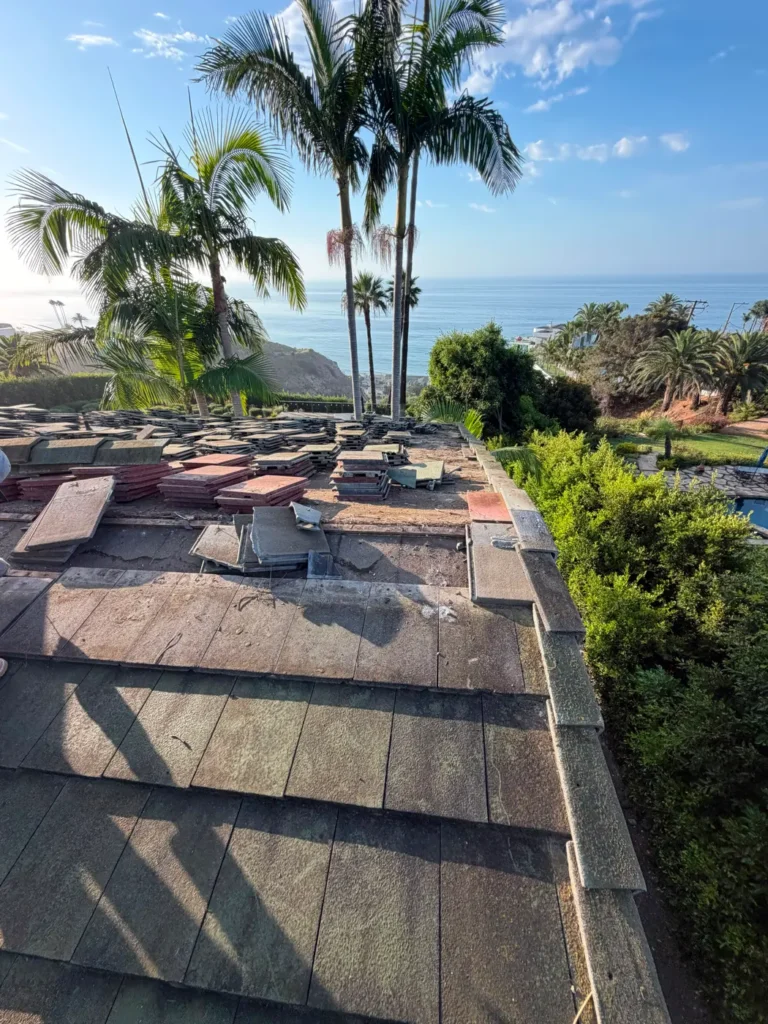
Fire-resistant roofing materials NEMA installs
At NEMA Roofing, we offer a variety of Class A fire-rated roofing materials to match your aesthetic and budget. Our crews install three kinds of Class A roof:
- Metal roofing: noncombustible, light on the frame.
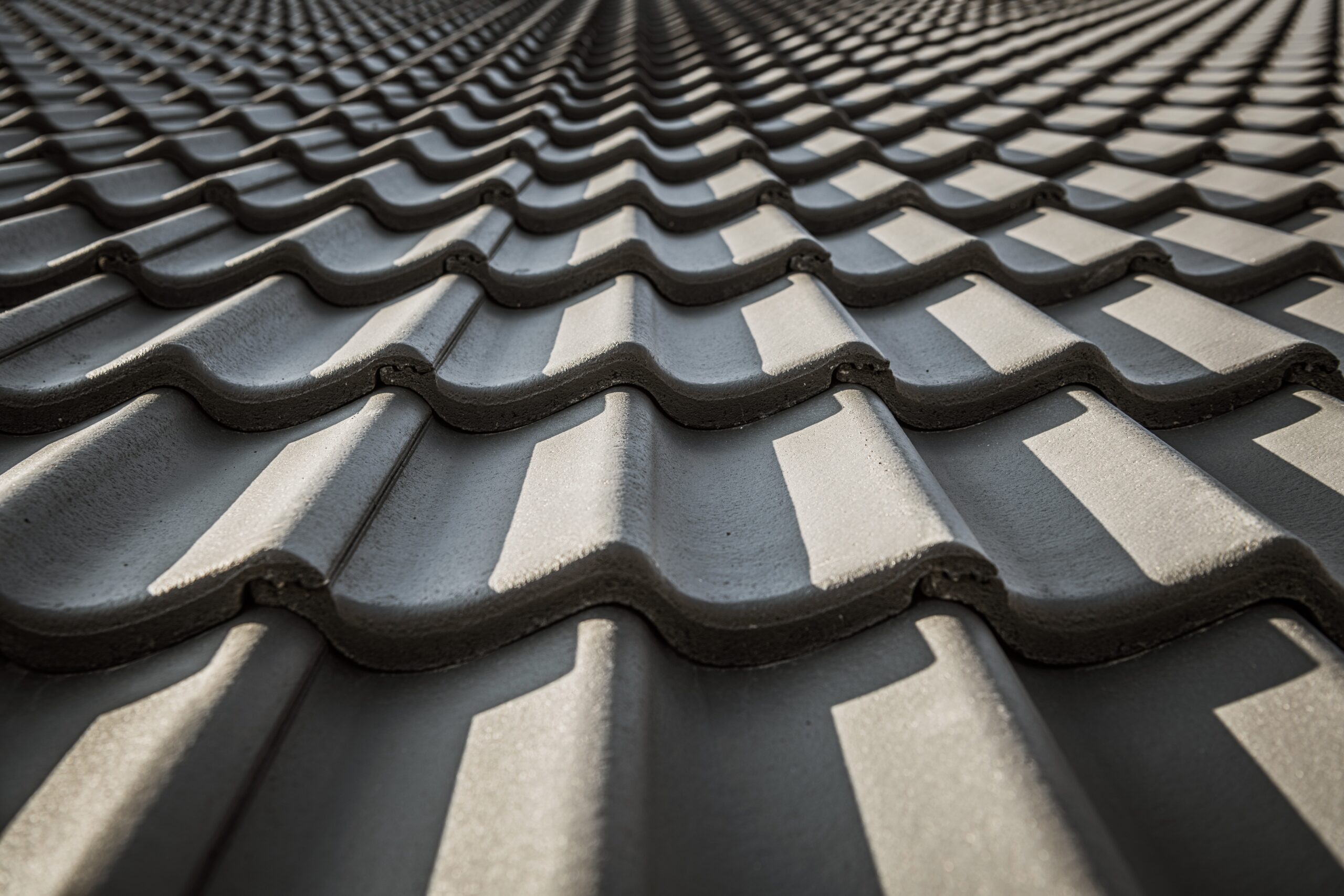
- Clay and concrete tile: Class A coverings, heavy, with gaps at eaves and ridges that must be closed.
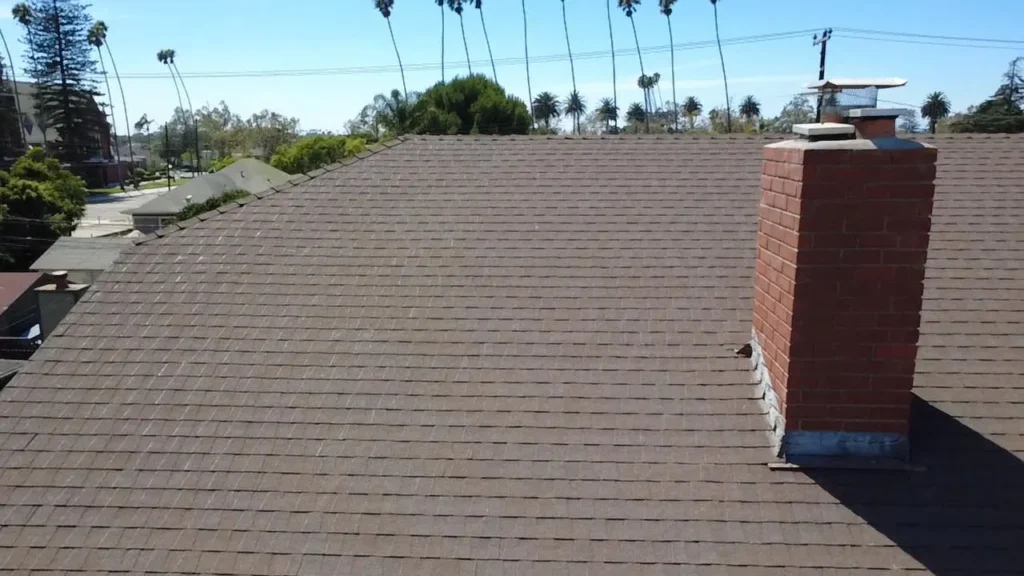
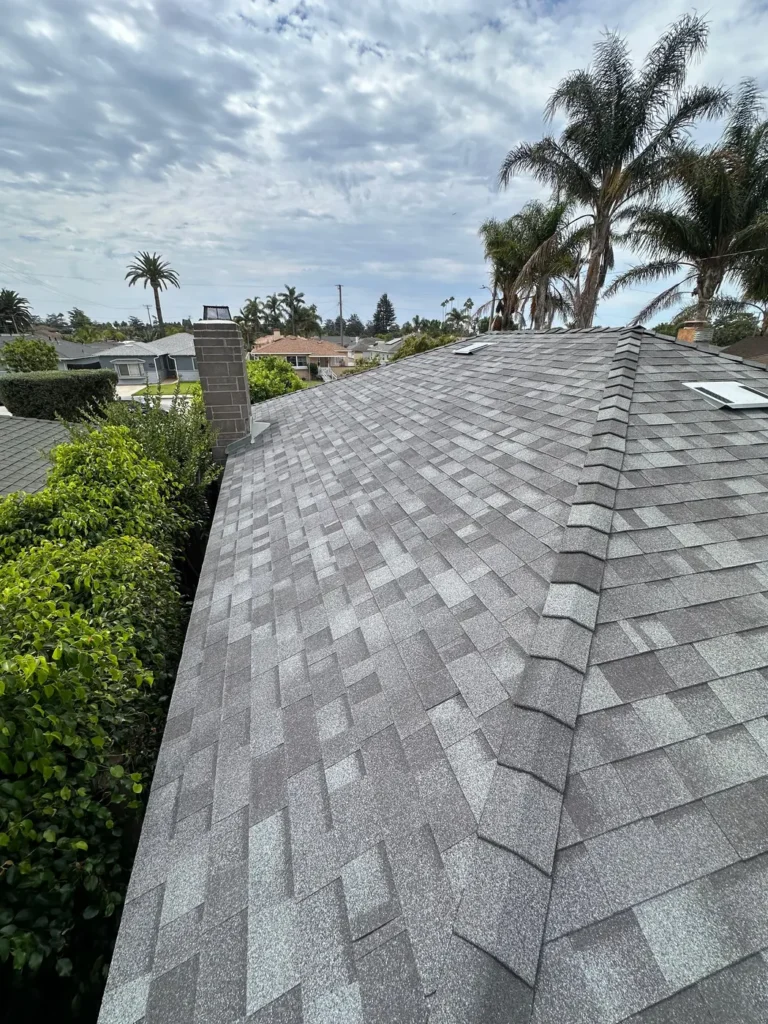
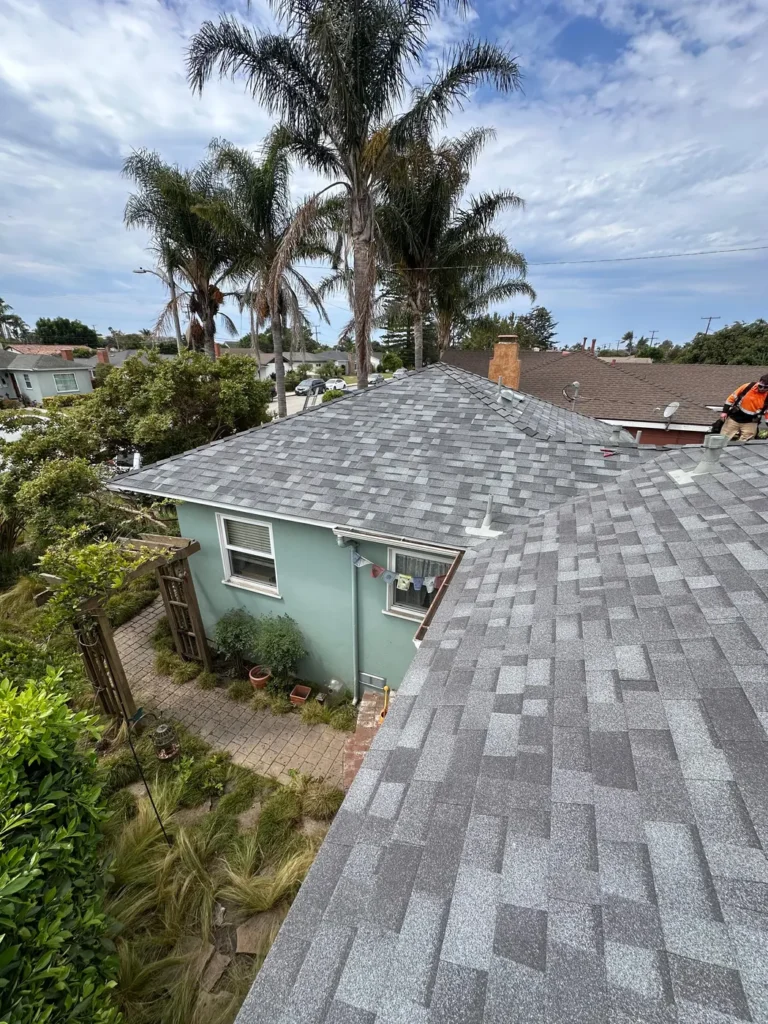
- Class A asphalt shingle systems, installed as part of a roof replacement.
NEMA is a GAF Master Elite, Owens Corning Preferred and Polyglass Preferred contractor. The table compares these roofs with the other Class A options you may hear about.
Class A roofing materials compared
| Material | How it reaches Class A | What to watch in a fire zone |
|---|---|---|
| Steel, copper and metal shingles | Class A by code on a noncombustible deck; on a wood deck, through the manufacturer’s tested assembly | Profiled panels can leave an air space over the deck that must be protected and closed at the eaves (see the install list below) |
| Aluminum | On a wood deck, a tested assembly with an added layer under the panels, because aluminum melts at a low temperature | Follow the listing’s underlayment exactly |
| Clay and concrete tile | Class A by code on a noncombustible deck; by listing on a wood deck | Gaps at eaves and ridges collect nests and debris; they need bird stops and mortared hip and ridge caps |
| Asphalt shingles (fiberglass mat) | Fiberglass-mat shingles are commonly listed Class A; check the listing | Leaves and needles in valleys and gutters |
| Slate | Class A over ASTM D226 Type II underlayment without further testing | Weight and brittleness |
| Fire-retardant-treated wood shakes | In a fire zone, only as a Class A assembly, using shakes listed by the State Fire Marshal after natural weathering tests | Untreated shakes are unrated, and some communities do not allow wood roofs at all |
| Synthetic (recycled plastic or rubber) | Class A only as a tested assembly with added layers | Ask for the assembly listing |
What a Class A roof installation includes in a fire zone
In a fire hazard zone the code checks how the roof is built, not just what it is made of. New buildings must have items 2 to 5 (California Wildland-Urban Interface Code, section 504.2), and the Building Code points roofs in fire hazard zones to the same chapter (section 1505.1.1). Items 1 and 6 come from Health and Safety Code 13132.7(i). Look for them in a proposal:
- A Class A assembly installed as its listing describes.
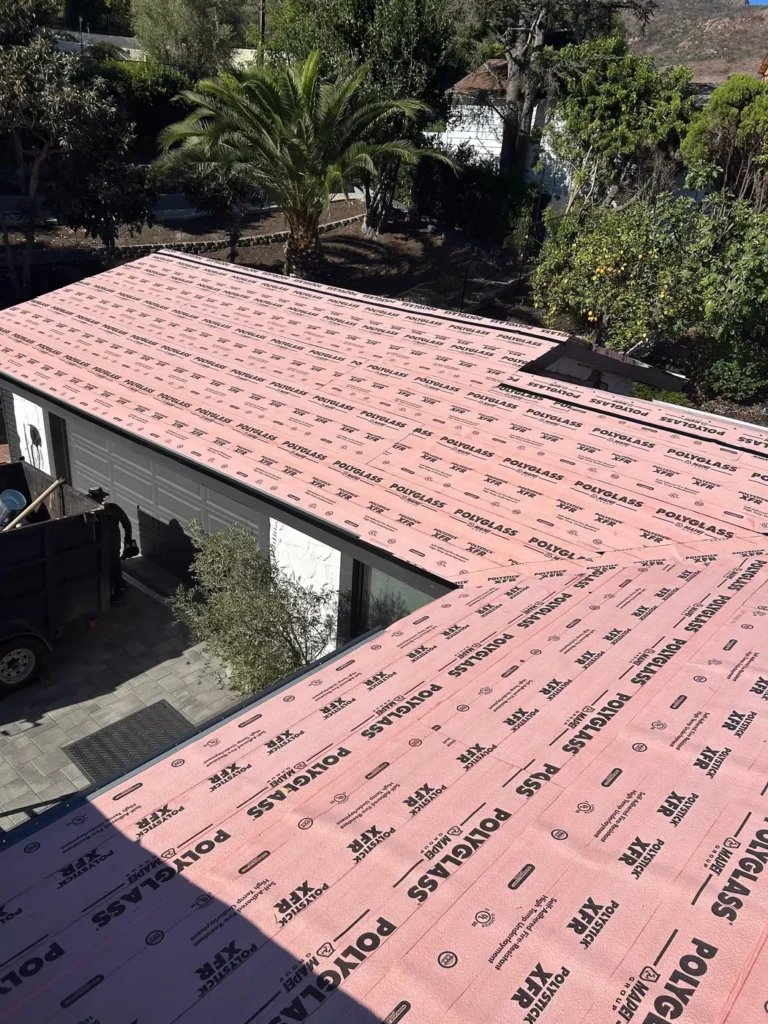
- Where tile or profiled metal leaves an air space over a wood deck: a 72-pound mineral-surfaced cap sheet (ASTM D3909), at least 1 inch of mineral wool board or other noncombustible material, or an underlayment listed as part of the Class A assembly.
- Bird stops at the eaves where the profile allows, so debris and embers stay out.
- Hip and ridge caps mudded in (set in mortar) to keep fire and embers out.
- Valley flashing of 26-gauge or heavier corrosion-resistant metal over a 36-inch-wide 72-pound cap sheet, the full length of the valley.
- A certification of the roof covering’s fire class from the manufacturer or supplier, which the installer must give the owner.
The same part of the code also covers eaves and soffits, gutters and vents. Ask for each item in writing when you compare bids for a roof replacement.
Keeping a fire-resistant roof ready, and when to replace it
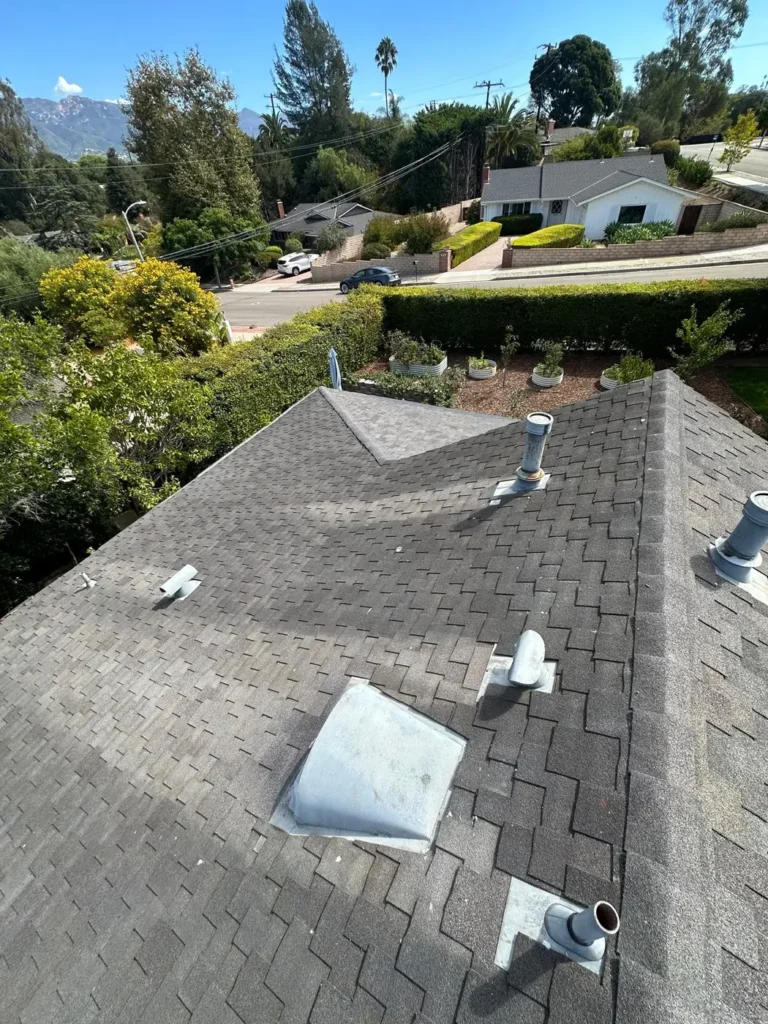
A Class A rating does not stop dry leaves and pine needles from burning on the roof. Embers that land in a debris-filled gutter or valley light it, and the flames reach the roof edge and the siding. Before fire season:
- Clear the roof, valleys and gutters, and cut back branches over the roof.
- On tile roofs, check the bird stops and ridge mortar and replace missing pieces.
- Cover vents with 1/16 to 1/8 inch noncombustible, corrosion-resistant metal mesh.
- Keep operable skylights closed when a fire is near.
Replace rather than maintain when the roof is untreated wood shake (no repair makes it rated) or has reached the end of its life. Not sure what is on your house? A roof inspection tells you the covering and its condition.
Little Taste From Big Projects
LUXURY METAL ROOFING - BEVERLY HILLS
FIRE RATED METAL ROOFING
2 PIECE TILE - SANTA BARBARA
CLASS A FIRE-RATED TILE ROOF
TILE ROOF INSTALLATION - SANTA BARBARA
TILE ROOF INSTALLATION - MONTECITO
METAL ROOF INSTALLATION - MALIBU
ROOF INSTALLATION - SANTA BARBARA
ASPHALT SHINGLE ROOF INSTALLATION
SHINGLE ROOF REPLACEMENT
TILE ROOF REPLACEMENT
PRESIDENTIAL SHINGLE INSTALLATION
Fire-resistant roofing questions
Is a metal roof Class A?
Yes, as a Class A assembly. Steel, copper and metal shingles on a noncombustible deck are Class A by code; on a wood deck the tested assembly sets the rating, and aluminum needs an added layer under the panels.
Is a tile roof Class A?
Yes. Clay and concrete tile are Class A coverings; in a fire zone they also need a cap sheet or listed underlayment, bird stops at the eaves and mudded hip and ridge caps.
Is there such a thing as a fireproof roof?
No. The test compares roofs under set lab fire exposures, and ASTM notes it does not predict how a roof performs in every real fire. Class A is the top rating.
Metal or Class A shingles: which is better for wildfire?
Both meet the same Class A standard. Metal does not burn; fiberglass shingles are combustible but listed Class A as a system. Debris, roof edges and vents matter with either, so weight, budget and look decide.
Does a Class A roof lower home insurance?
It can. Under California’s Safer from Wildfires regulation, a Class A fire-rated roof is one of the steps that qualify a home for an insurance discount. Ask your insurer how it applies.
How do I know if my roof is Class A?
Ask for the fire-class certification the installer must give you in a Very High zone, or for the product listing. Wood shakes with no paperwork count as unrated.
Why Homeowners Trust NEMA Roofing
As a leading fire-resistant roofing contractor, NEMA Roofing is committed to quality, safety, and expert craftsmanship. Here’s why homeowners choose us:
- Class A Roofing Expertise: We specialize in installing Class A fire-rated roofing to ensure maximum protection.
- Custom Roofing Solutions: We help you select the best fire-resistant material for your home’s style and needs.
- Precision Installation: Proper installation is key to a fire-resistant roof. Our team ensures every project meets strict safety and building codes.
- Extensive Experience: With years of experience, we understand the challenges posed by wildfire risks and extreme weather conditions.
- Full-Service Support: From consultation to project completion, we guide you every step of the way.
CONTACT US
As one of the leading roofing contractors, we at The NEMA Roofing are proud to offer a variety of roofing services for both residential and commercial facilities. We are your one-stop roofing experts that can offer a perfect solution for your home or business.
If we sound like a company you’d like to talk to, fill in the form below and arrange your no-obligation on-site assessment and proposal.
Service Area
Ventura County, Los Angeles County, Santa Barbara County, San Bernardino County, and Riverside County