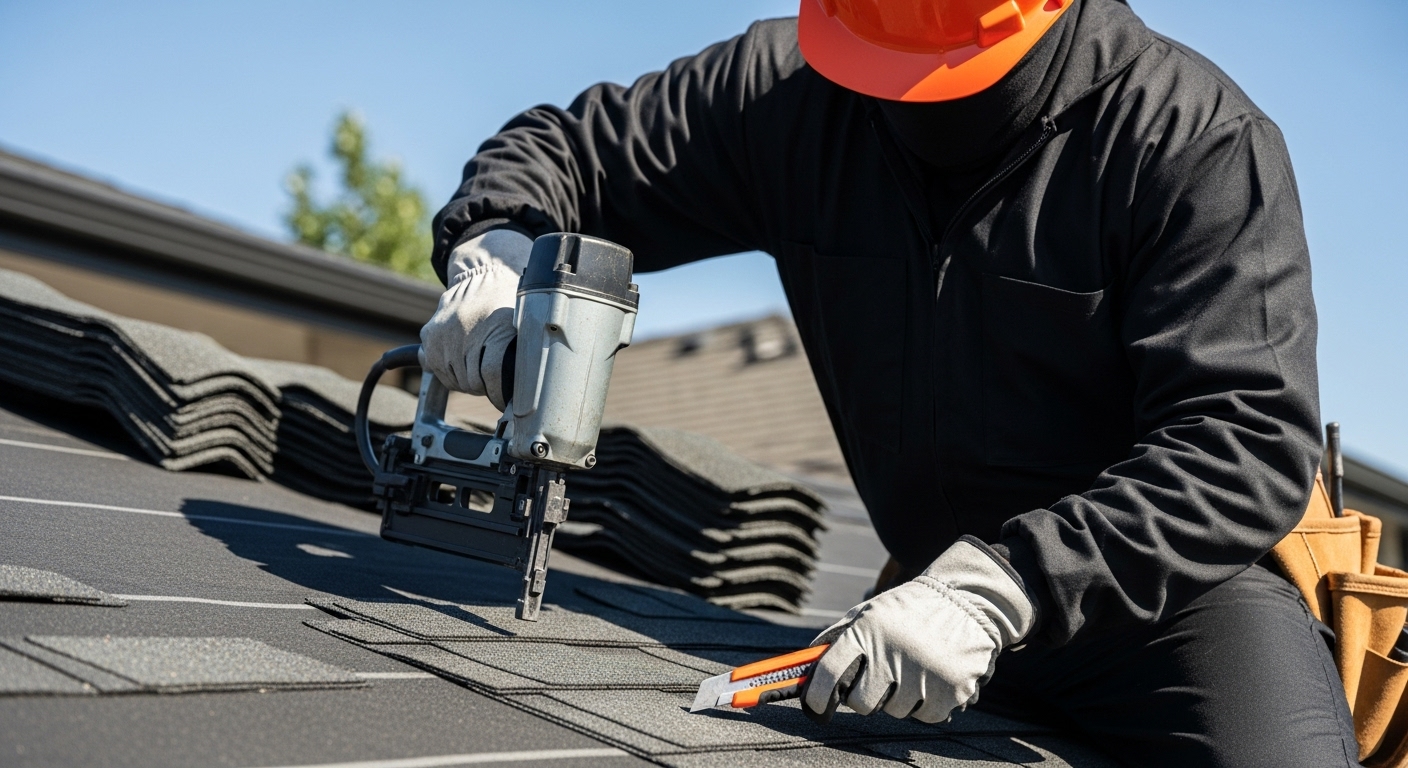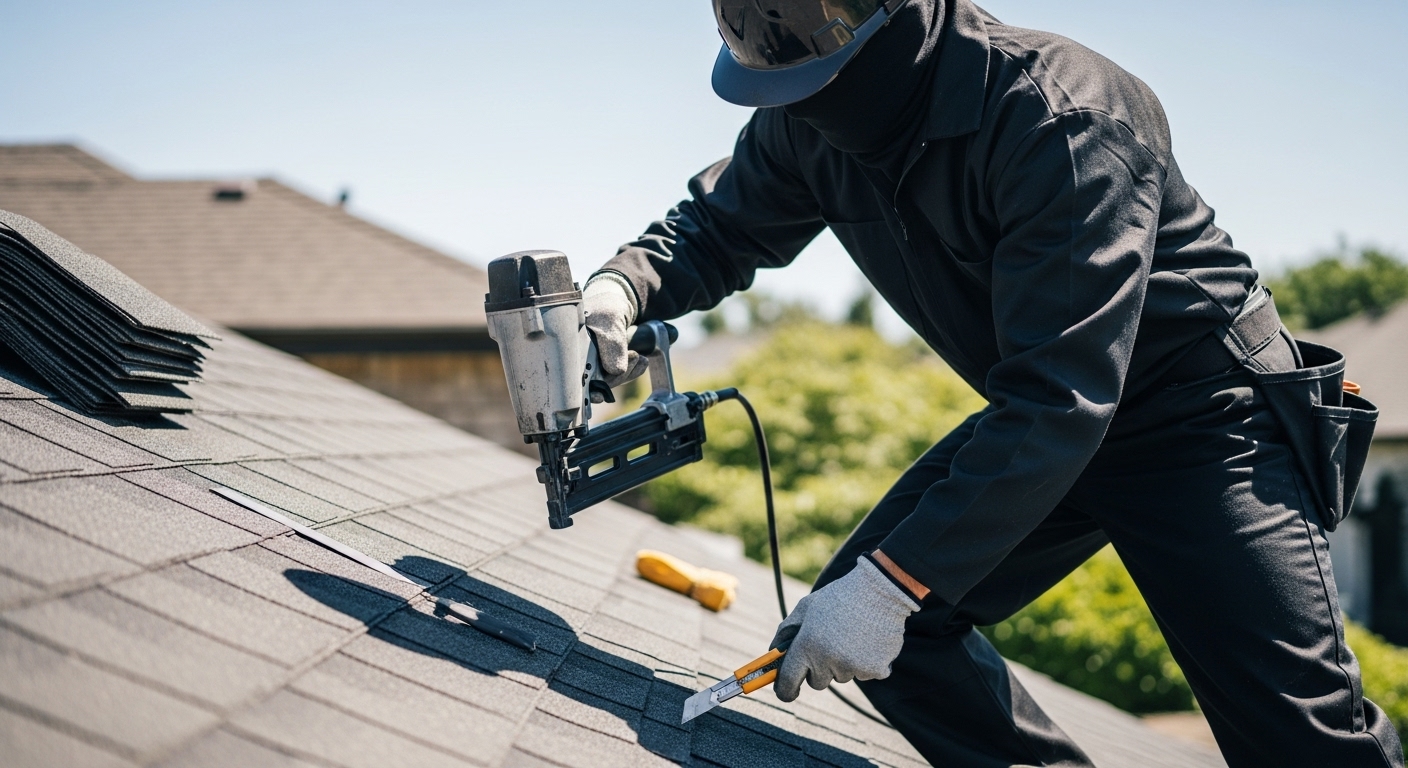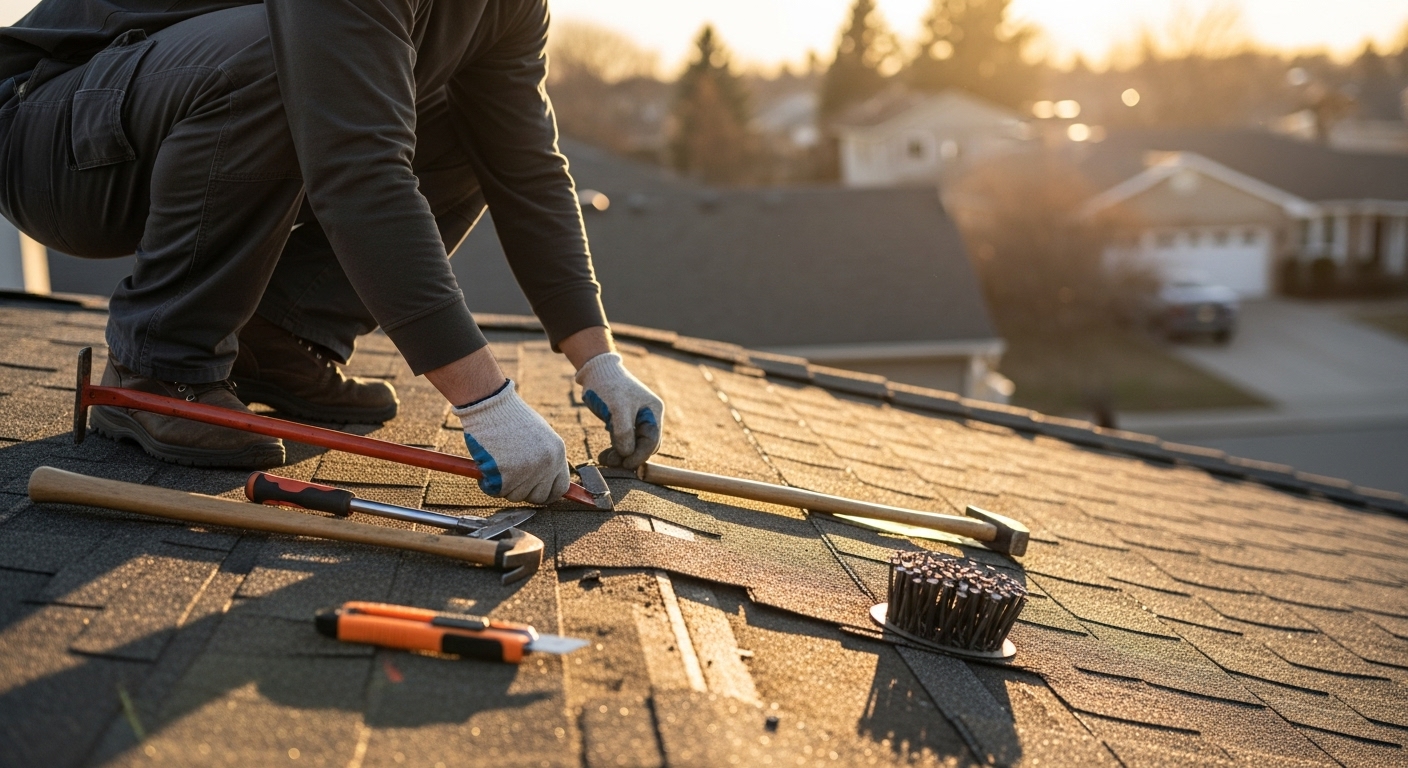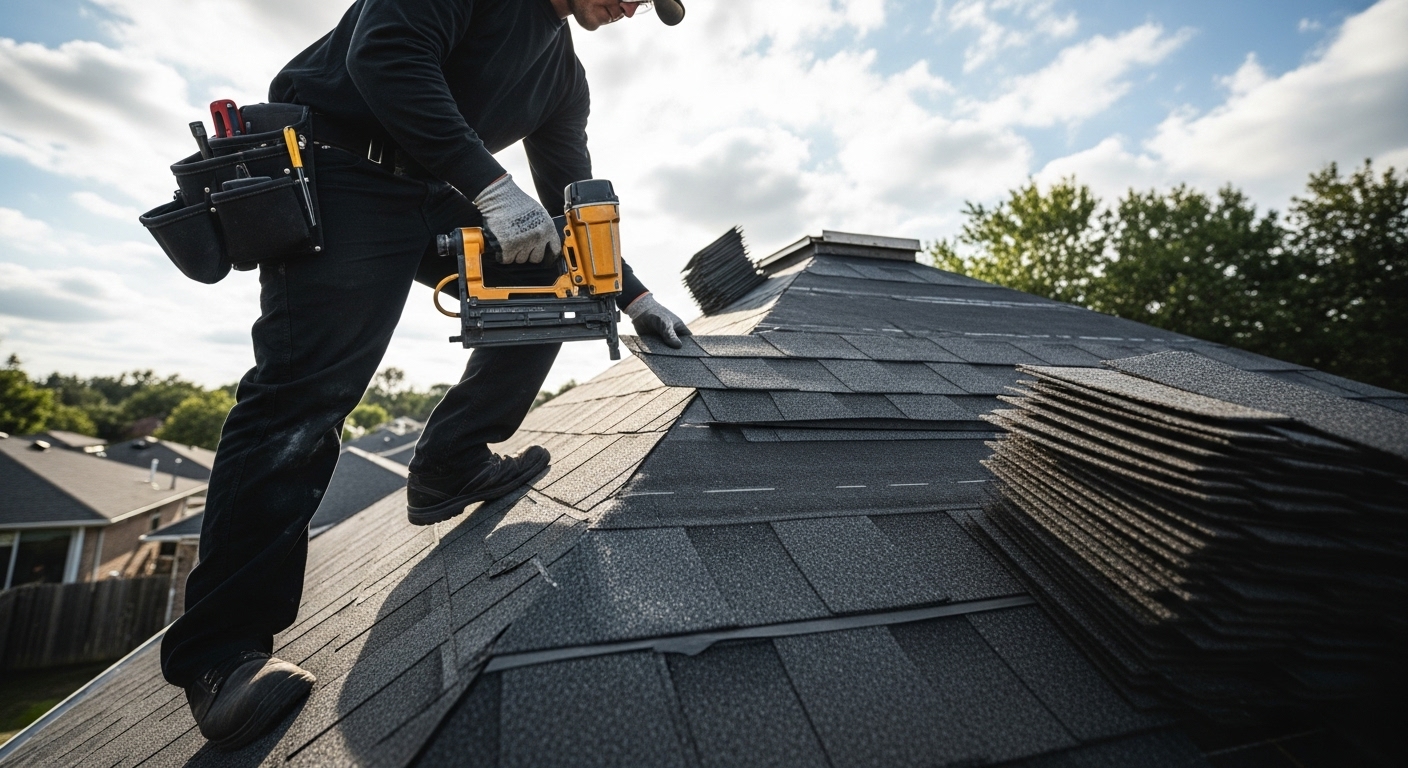
In Tarzana, emergency roof leaks have a rhythm of their own. The phone often rings during a sudden downpour or after a night of roaring Santa Ana winds, and the goal is always the same: stabilize the situation quickly, protect interiors and tenants, and chart the path to a durable permanent solution. As someone who has worked countless storm calls across the Valley, I can tell you that effective emergency response is less about heroics and more about preparation, disciplined assessment, and clear communication. If you are building your emergency plan now, it helps to have a relationship with specialists in commercial roofing services who know the local terrain, traffic patterns, and weather quirks.
The first minutes of an emergency call set the tone. We start by gathering details from building staff: where water is appearing, how quickly it is spreading, whether power has been shut off near wet areas, and what is directly above the leak—an HVAC curb, a vent, or perhaps a parapet corner. Photos from a smartphone help orient the response team before they arrive. Meanwhile, on-site staff can make small, safe moves: protect electronics, move inventory off the floor, and place containers to catch drips. Clear notes and a calm process beat frantic guesses every time.
Arrival and access dictate speed. In Tarzana’s busy corridors, after-hours access can be both a blessing and a challenge. Security systems, locked gates, and roof access points must be ready to go. A well-marked path to the roof saves minutes that matter. Once on the roof, the team stabilizes safety first—temporary edge protection if needed, visibility lighting, and a quick scan for hazards like loose metal or wind-blown debris. Only then does leak tracing begin in earnest.
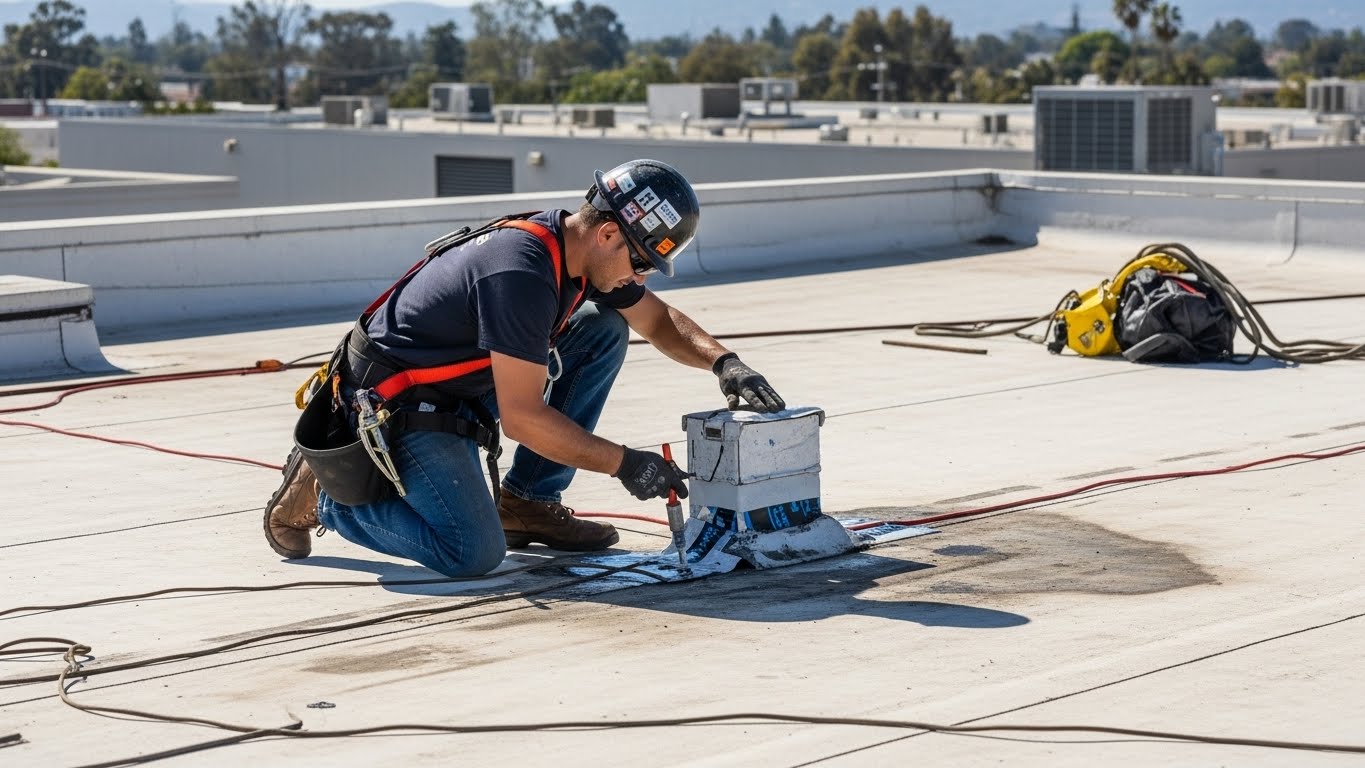
Leak tracing during an active storm is part observation, part experience. Water follows structure and physics, not our assumptions. On single-ply roofs, we check seams near drains and scuppers, curb corners where flashing heights may be compromised, and terminations along parapets. On built-up and modified bitumen, foot traffic scars and aged cap sheet splits near ponding zones become suspects. We use hand rollers, towels, and controlled heat to dry small areas long enough to effect temporary seals. Temporary patches are placed with the expectation that wind and water are still present, so edges are generous and overlapping in the direction of flow.
Temporary repairs should be strategic, not haphazard. The goal is to stop water quickly without creating demolition work for the permanent fix. On TPO and PVC, we may use compatible tapes or temporary heat-welds if conditions allow, knowing we will return to rework those areas under dry conditions for a proper seam. On EPDM, primed and pressure-sensitive patches offer reliable short-term control. For drains and scuppers, clearing debris is often the single most effective move; raising a clogged strainer above surrounding ponding can change the entire behavior of the roof during the storm.
Interior protection proceeds in parallel. Coordinating with building staff, we isolate affected areas, protect data rooms or sensitive equipment, and communicate with tenants about what to expect. Moisture mapping begins even before the rain stops so we can track possible migration paths. We document everything as we go—photos of temporary work, notes on suspected sources, and a list of materials used. That documentation becomes the bridge between the emergency event and the permanent solution.
After the weather clears, a disciplined follow-up visit is essential. We verify dry-down, open limited areas to inspect substrates, and test nearby seams or transitions. It is common to discover that the visible leak was a symptom of a broader issue: inadequate flashing heights, failing edge metal, or chronic ponding that overwhelmed a drain. The permanent repair plan addresses the root cause with durable details—replacing compromised flashings, correcting slope with tapered insulation, or upgrading edge metals to resist uplift during the next wind event.
Communication with tenants and management is a constant thread. In mixed-use buildings along Ventura Boulevard, restaurants and medical offices require clear expectations around odor, noise, and access times. We outline the steps, from preparation to final inspection, and keep photos flowing so stakeholders see progress. Good communication reduces disruption and builds confidence that the emergency is truly moving toward resolution.
Preventing the next emergency begins with understanding why this one occurred. Was the trigger a rare, intense storm, or did clogged drains and neglected maintenance set the stage? Many emergency calls in Tarzana have preventable roots. A simple pre-rain cleaning of drains and a quick scan of parapet corners can eliminate the most common sources of trouble. Where unusual events are to blame, we look for resilience upgrades that are proportionate and practical.
Safety remains paramount. During emergencies, it is tempting to rush, but rooftops are unforgiving in high winds and rain. Tied-off crew members, clear communication via radios, and well-lit work zones reduce risk. We avoid ad hoc solutions that put people near edges or on unstable surfaces. A small delay to set safety is always justified.
Some emergencies reveal deeper structural issues. If we find saturated insulation across large areas or see evidence of long-term deck deterioration, we discuss a phased plan that stabilizes the building while preparing for a broader project. Phasing might include installing temporary walk pads to channel foot traffic away from fragile zones, isolating sections with temporary membranes, or scheduling night work to avoid daytime tenant interference during critical phases.
Finally, we close the loop with a clear, written summary. It includes the initial observations, temporary measures, diagnostic results, and the permanent repair scope with anticipated timeline. Owners appreciate this not just for accountability, but because it becomes part of the building’s maintenance record. With that in hand, future storms are less likely to become chaotic events. And when a new issue does arise, we are that much faster at finding and fixing it.
Frequently Asked Questions
Q: What should building staff do first when a leak appears?
A: Protect people and critical equipment, mark the area, and collect basic information about leak location and intensity. Photos help responders arrive prepared. Avoid sending untrained personnel onto the roof during active storms.
Q: Are temporary patches safe for long periods?
A: They are designed for stabilization, not longevity. After the weather clears, schedule a follow-up to implement permanent repairs. Temporary materials can degrade under UV and thermal cycling if left in place too long.
Q: How quickly can a crew respond in Tarzana?
A: Response times vary by conditions and access, but a pre-existing service agreement and clear roof access dramatically improve speed. Establishing relationships before storm season is the best way to ensure prompt help.
Q: What are the most common emergency leak sources?
A: Clogged drains and scuppers, failed flashing corners at parapets, and seams near rooftop equipment are frequent culprits. Wind-driven rain can also exploit loose edge metals and coping joints.
Q: Will emergency work affect my warranty?
A: When your roof is under manufacturer warranty, ensure that temporary and permanent measures follow approved methods and materials. Document everything and notify the manufacturer if required by the warranty terms.
Q: Can leaks be prevented entirely?
A: While no roof is immune to extreme events, routine maintenance, drain cleaning, and strategic upgrades reduce the likelihood of emergencies and limit their impact when they occur.
Q: What if water is coming from multiple locations inside?
A: Multiple interior points often trace back to a single source where water spread within the roof assembly or along the deck. Thorough diagnostics will identify the true origin and map the moisture path.
Be Ready Before the Next Storm
If your building has sprung a leak or you want to get ahead of the next weather event, we can help with rapid triage and a plan that addresses root causes. With clear communication and disciplined follow-through, emergencies become manageable. When you are ready to set up a response strategy with local experts in commercial roofing, let’s connect and make your roof resilient for the seasons ahead.
Preventive Commercial Roofing Maintenance in Tarzana California