Ask any property manager in Tarzana about roofing budgets, and the conversation quickly turns to cost per square foot. It is a convenient yardstick, but it hides a world of variables that really drive project totals. In the San Fernando Valley, where a single block can hold mid-century offices, newer tilt-ups, and renovated retail, those variables stack up quickly. My goal here is to unpack the factors that shape cost per square foot—without quoting numbers—so you can evaluate proposals with confidence and make smart, long-term decisions. If you are early in planning, consider partnering with seasoned pros in commercial roofing services who can translate your building’s story into an accurate, transparent scope.
Think of cost per square foot as an outcome, not a starting point. Before anyone can put a meaningful figure on paper, they need to understand the roof assembly you have, its condition, and the performance you expect. A modest overlay on a dry, stable deck will land differently than a full tear-off with insulation upgrades and deck repairs. In Tarzana, ultraviolet intensity and daily temperature swings push materials hard, which influences system selection and detailing. The more clearly you define objectives—longevity, energy performance, serviceability—the more realistic and comparable your proposals will be.
Roof size and geometry are the first, and most obvious, drivers. Large, open fields benefit from economies of scale, whereas highly partitioned roofs with dozens of small sections demand more labor for flashing and detailing. Parapet height, number of inside and outside corners, and the presence of offsets or height transitions affect production pace and the quantity of accessories required. The square footage might be the same on two buildings, yet the labor-hours per square will diverge because complexity is different.
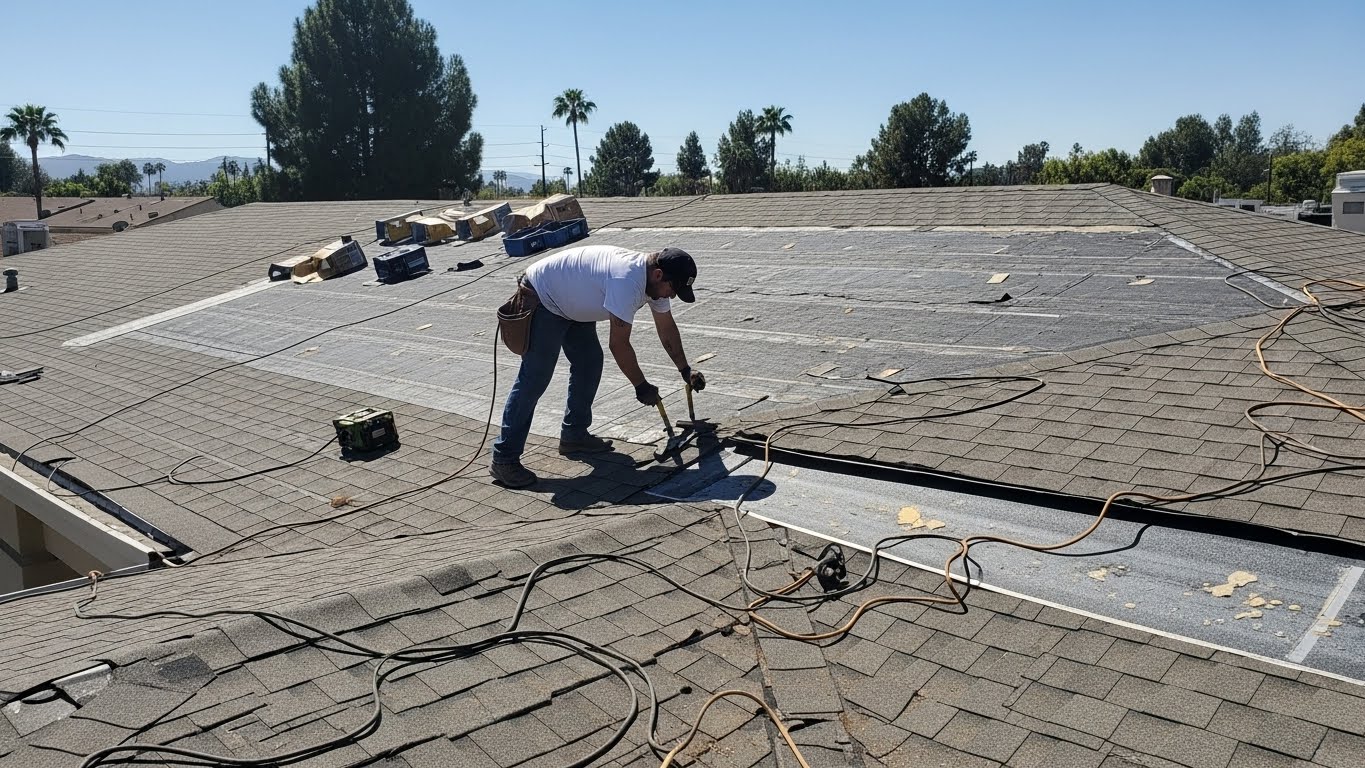
Existing conditions carry significant weight. A roof with multiple previous overlays may approach local code limits for weight or height, pushing a project toward tear-off. Moisture trapped in insulation forces replacement even when the membrane appears intact. Deck condition—whether metal, wood, or concrete—matters: rust, rot, or cracking can trigger localized repairs or reinforcements. These are the discoveries that turn a simple per-square assumption into a more nuanced scope. Good contractors minimize surprises by combining moisture scans, core cuts, and visual inspection before proposing a plan.
Access and logistics shape crew efficiency and safety, and by extension influence cost. A straightforward ladder and clear staging area allow faster production. By contrast, a building with limited parking, no crane access during business hours, or a requirement to lift materials over power lines demands more time and coordination. In Tarzana’s busy commercial corridors, night or early morning deliveries sometimes make sense, but they require additional planning and supervision. Logistics do not show up in a material list, yet they are pivotal in the cost-per-square outcome.
System selection is where owner priorities come into focus. Highly reflective single-ply membranes offer energy benefits and clean aesthetics. Modified bitumen brings toughness and multiple plies of redundancy. Hybrid assemblies that combine adhered cover boards with welded single-ply balance puncture resistance and speed. Each path involves its own set of accessories, adhesives or fasteners, and edge treatments. When you see a spread in proposals, examine the underlying assemblies and details rather than assuming it is a markup difference. Materials are the visible part of a larger performance conversation.
Insulation and cover boards deserve special attention. In the Valley’s heat, adequate insulation helps buffer interior spaces and protects membranes from extreme deck temperatures. The thickness, type (e.g., polyiso), and the use of high-density boards beneath the membrane influence long-term durability and serviceability. Where roofs host heavy foot traffic or equipment, robust cover boards reduce damage and support clean seams. These choices can nudge cost per square up or down, but they also impact how the roof ages and how often it needs attention.
Perimeter and penetration details are small on paper and large in practice. Tarzana’s Santa Ana winds make edge metal strength and continuity non-negotiable. Continuous cleats, proper fastener spacing, and secure terminations protect the field membrane from uplift. At penetrations—HVAC curbs, conduits, vent stacks—good flashings and guard pads resist vibration and technician traffic. The quantity and complexity of these details influence both schedule and final cost density across the roof area.
Labor environment and scheduling are quiet cost drivers. Daytime work is often fastest, but tenant operations, medical facilities, and restaurants may require off-hours or odor-free materials. Coordinating around those needs increases supervision and can slow installation. When comparing proposals, look for notes about phasing, protection of intakes, and communication with tenants. These considerations are a mark of professionalism and often reflect real-world constraints that influence production.
Code and permitting provide the guardrails. Los Angeles energy standards encourage reflective roofs and adequate insulation, which may require upgrades if your existing roof is underperforming. Perimeter fire ratings, overflow provisions, and structural considerations around added equipment all shape scope. Code-driven improvements can feel like extras when you are fixated on cost per square, but they are prerequisites to a compliant, durable installation.
Restoration versus replacement is another fork in the road. If a roof is dry, adhesion is strong, and the assembly is structurally sound, a restoration approach using compatible materials or coatings might extend service life at a lower disruption level. However, restoration is not a shortcut around trapped moisture or failing decks. Savvy owners embrace a decision tree: if diagnostics confirm a solid foundation, plan for restoration with clear maintenance commitments; if not, invest in replacement that resets the lifecycle with a clean substrate.
Warranty terms are part of the value equation. Longer coverage often requires specific details, inspections, and sometimes a higher level of manufacturer involvement. I encourage owners to weigh warranty length against the building’s future: anticipated tenant changes, planned equipment additions, or potential expansions. Sometimes a robust but moderate warranty paired with a disciplined maintenance program delivers the best total lifecycle value.
Comparing proposals fairly requires standardizing scope. Ask each bidder to include or exclude the same elements: tear-off versus overlay, insulation thickness, cover board type, edge metal gauge, flashing heights, walkway pads, and drain work. Apples-to-apples scopes reveal true differences in approach and illuminate the cost drivers at play. I also recommend requesting a simple drawing that shows intended drainage improvements; a picture clarifies intent better than line items alone.
Mid-project discoveries are a reality, not a failure of planning. What separates a good experience from a frustrating one is how those discoveries are handled. A contractor who documents hidden conditions quickly, proposes options with clear pros and cons, and communicates impacts empowers you to make timely, informed decisions. That professionalism is part of the value you are buying, and in my experience, it correlates strongly with roofs that perform as promised. For this reason, many owners in the Valley lean on trusted commercial roofing partners who are transparent and thorough.
Finally, remember that cost per square foot is only the beginning of your ownership cost. A roof that is easier to service, stays cleaner, and resists foot traffic will save operational dollars and headaches. Thoughtfully placed walk pads, reinforced corners, high-quality edge metals, and accessible drains reduce the need for frequent small repairs. Documentation and a service plan transform a new or restored roof into a predictable asset rather than a nagging variable.
Frequently Asked Questions
Q: Why do bids for the same roof vary so much in cost per square?
A: Differences usually stem from scope assumptions. One contractor may include tear-off, added insulation, and upgraded edge metals, while another assumes overlay and minimal detail work. Ask for standardized scopes and drawings to reveal these distinctions.
Q: Is restoration a legitimate alternative to replacement?
A: Yes, when the roof is dry, stable, and compatible with the restoration materials. Diagnostics should lead the decision. Restoration can extend service life with less disruption, but it is not a solution for saturated insulation or compromised decks.
Q: How does building access affect cost per square?
A: Difficult access slows production and increases supervision needs. Limited staging, restricted crane use, or tight parking all add time that spreads across the square footage, raising the effective cost density.
Q: Do warranties change cost per square foot?
A: Often, yes. Longer or more comprehensive warranties can require specific materials, details, and inspections that influence labor and material choices. Consider warranty strategy in light of your building plans.
Q: What role does insulation play in both performance and cost?
A: Insulation thickness and the use of high-density cover boards affect energy performance and durability. These components influence cost per square but also reduce heat stress on the membrane and improve resistance to foot traffic and hail.
Q: How can I make proposals easier to compare?
A: Provide a clear, common scope for all bidders. Specify tear-off or overlay, insulation levels, cover board, edge metals, drainage improvements, and walkway pads. Request simple plan drawings to visualize intent.
Q: When should I schedule roofing work in Tarzana?
A: Work can be performed year-round, but planning around heat waves and wind events helps. Early morning starts are common in summer to manage temperatures, and off-hour work may be appropriate near restaurants or medical facilities.
Q: What indicators suggest that a full replacement is wiser than another patch?
A: Widespread moisture in insulation, brittle membranes across large areas, declining adhesion, and chronic drainage problems all point toward replacement. A thorough assessment will confirm the right path.
Move Forward With Clarity
If you are reviewing proposals or trying to forecast a project, we can help define scope, document existing conditions, and align system choices with your building’s goals. A clear plan protects your budget and your tenants. When you are ready to bring local expertise to the table, connect with trusted commercial roofing professionals who will turn a simple per-square question into a confident, long-term decision.
Emergency Commercial Roofing Leak Repair in Tarzana California